Budget-Friendly Parquet — Is Pine Really Worth It?
One of the most common questions I get asked Parfait Parquet is…
“What’s the cost to install a new parquet floor?”
More often than not, it comes from people who are looking to install pine parquet, which is typically the cheapest option on the market. But while it may be light on your wallet, I wouldn’t call it the best value—and here’s why.
⸻
The Price of Pine Parquet
Yes, pine can be extremely cheap—as low as €20 per m² for basic options, especially from big-box stores or online platforms. However, price alone shouldn’t be the deciding factor in your renovation.
⸻
The Colour Problem – That “Tango” Effect
The biggest issue my clients and members of renovation groups raise is colour. Pine contains a high amount of natural sap and resin, especially in faster-grown, farmed pine varieties. This is what causes that unwanted orange or ‘tango’ hue, which only becomes more pronounced over time, especially under sunlight.
⸻
Can’t I Just Stain It?
In theory, yes. But in practice, I strongly advise against it.
Why?
Because staining pine rarely gives a clean, even finish. Pine is a softwood, and its grain structure and resin content vary widely—especially across different species grown in France. This leads to blotchy and inconsistent results when you apply a stain. You’re essentially trying to make pine look like oak or another higher-grade wood, and it just doesn’t work well. The result often looks cheap—because it is.
⸻
What Do I Recommend Instead?
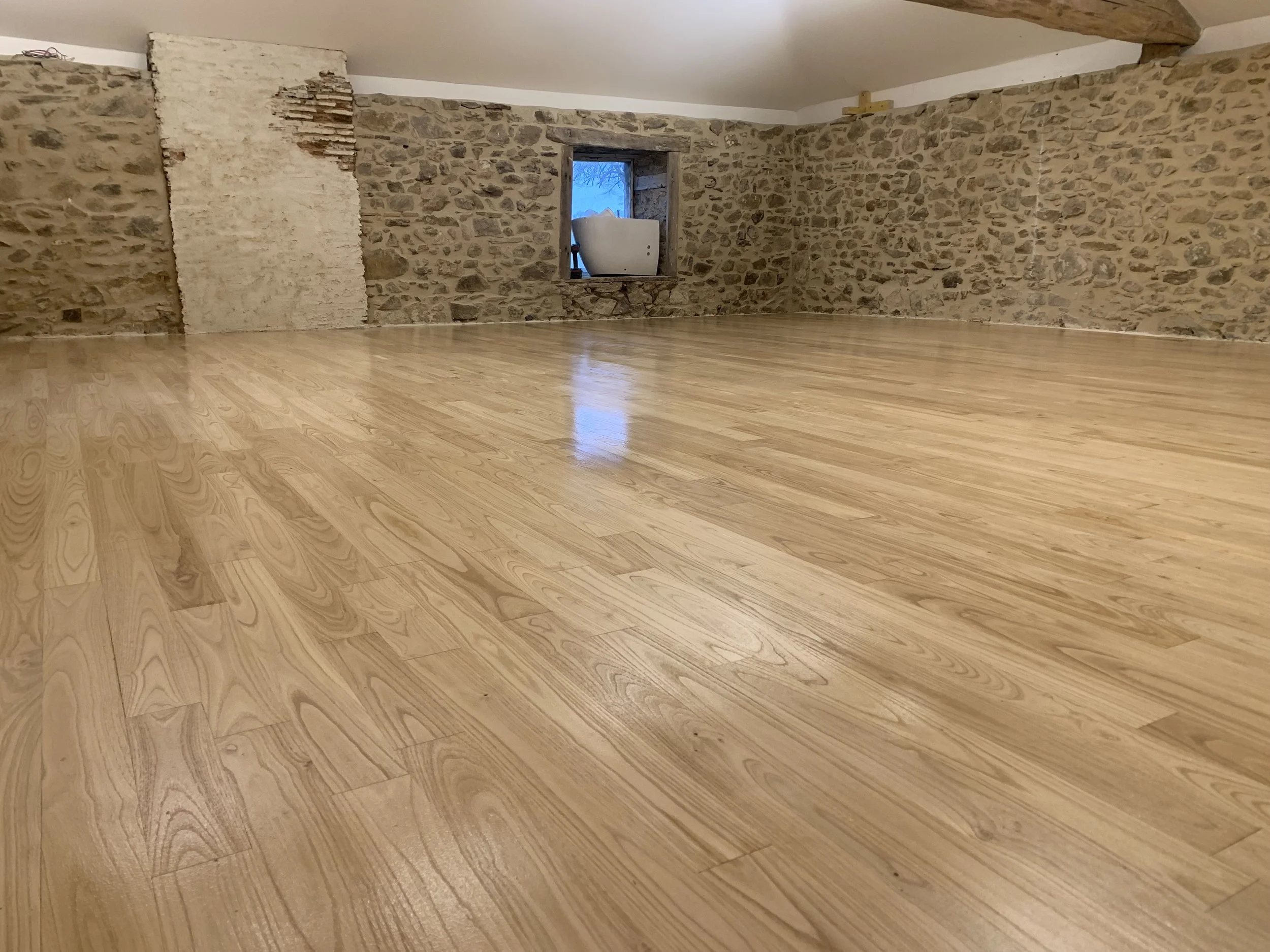
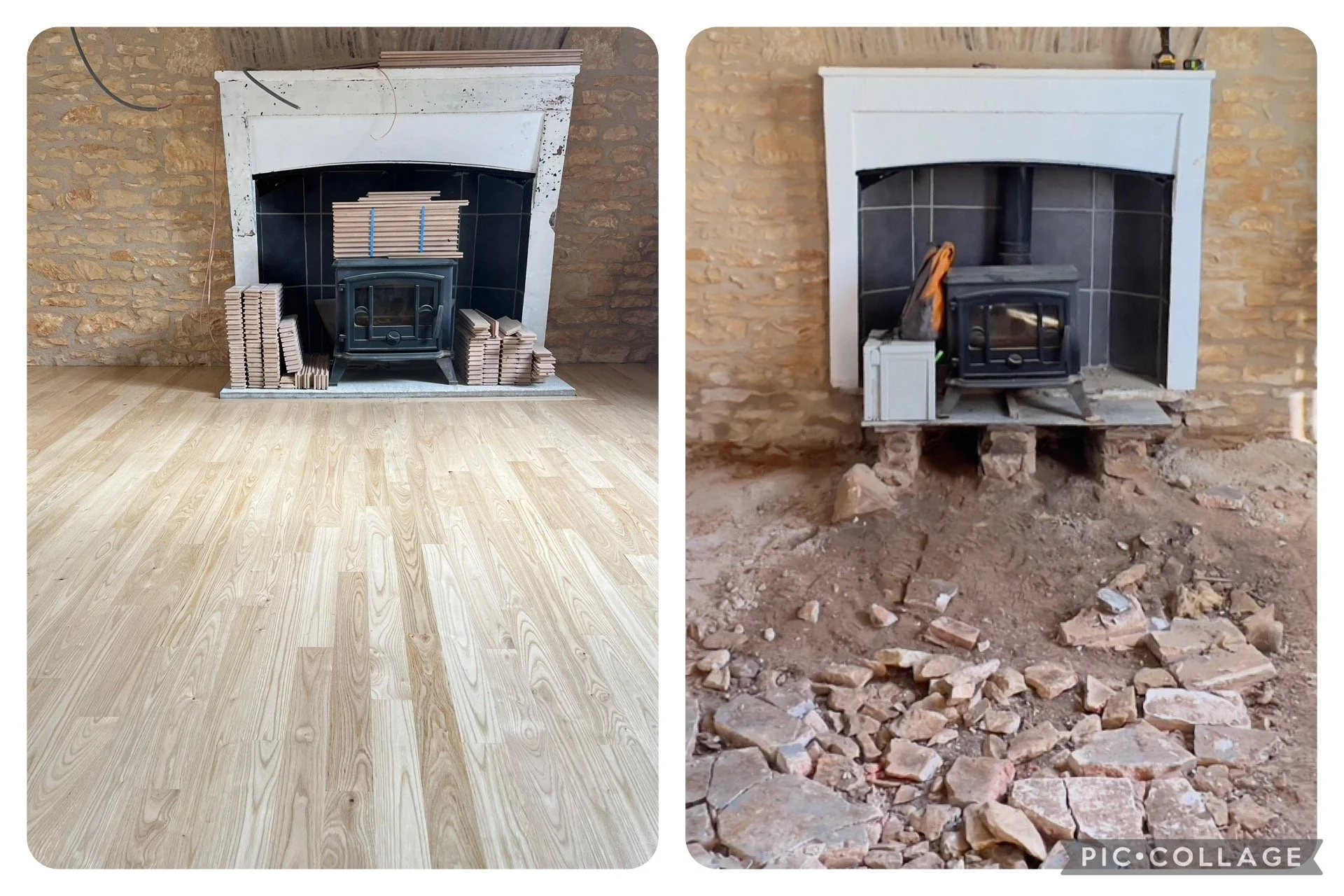
Step up your budget slightly and go for Chestnut parquet.
Yes, it costs more—roughly €55 per m² for a good AB-grade product—but it’s absolutely worth it. You can pay less but the quality drops and the work to get a good install increases plus it has more knots and faults
Here’s why:
• Natural beauty: Chestnut is naturally attractive and doesn’t need staining.
• Light and bright tones: Perfect for modern interiors without the dreaded orange cast.
• Durability: Chestnut is a medium hardwood, meaning it won’t dent or scratch as easily as pine.
• Easy to install: Works well with modern adhesives and installation methods.
• Sustainability: Chestnut is often sourced from responsibly managed forests in Europe.
⸻
Thinking About Oak Parquet?
Oak is a premium choice, and if you’re considering it, be ready to pay around €85 per m² for solid 23mm boards. It’s a great investment, but avoid going for 14mm thick oak unless you’re installing it over underfloor heating. The thinner boards don’t offer good value for money in most cases and compromise on longevity.
⸻
Final Thoughts
If you’re restoring or renovating, think about the long-term. While pine parquet may be tempting because of its low price, it often leads to disappointment in both finish and durability.
Spend a little more up front, and you’ll get a floor that looks better, lasts longer, and adds more value to your home. In most cases, chestnut offers the best balance of price, performance, and appearance.
I’ve included some sample photos so you can see the difference between both floors when they are finished correctly.
Feel free to get in touch if you Wish to discuss a project.
Happy renovating!