Pine Parquet: Why It’s Such a Challenge to Choose the Right Finish
By Brad Quarless
When it comes to parquet restoration, pine is one of the most misunderstood and unpredictable woods. Many homeowners assume that all floors can be treated the same way — but pine is different.
It’s soft, resinous, and can react unpredictably to oils, stains, and varnishes — especially if you don’t know what species you’re working with.
In this guide, I’ll show you how dramatically pine can change in appearance based on the finish you choose — and why it’s so important to assess the species and condition of the wood before applying anything.
One Wood, Four Completely Different Looks
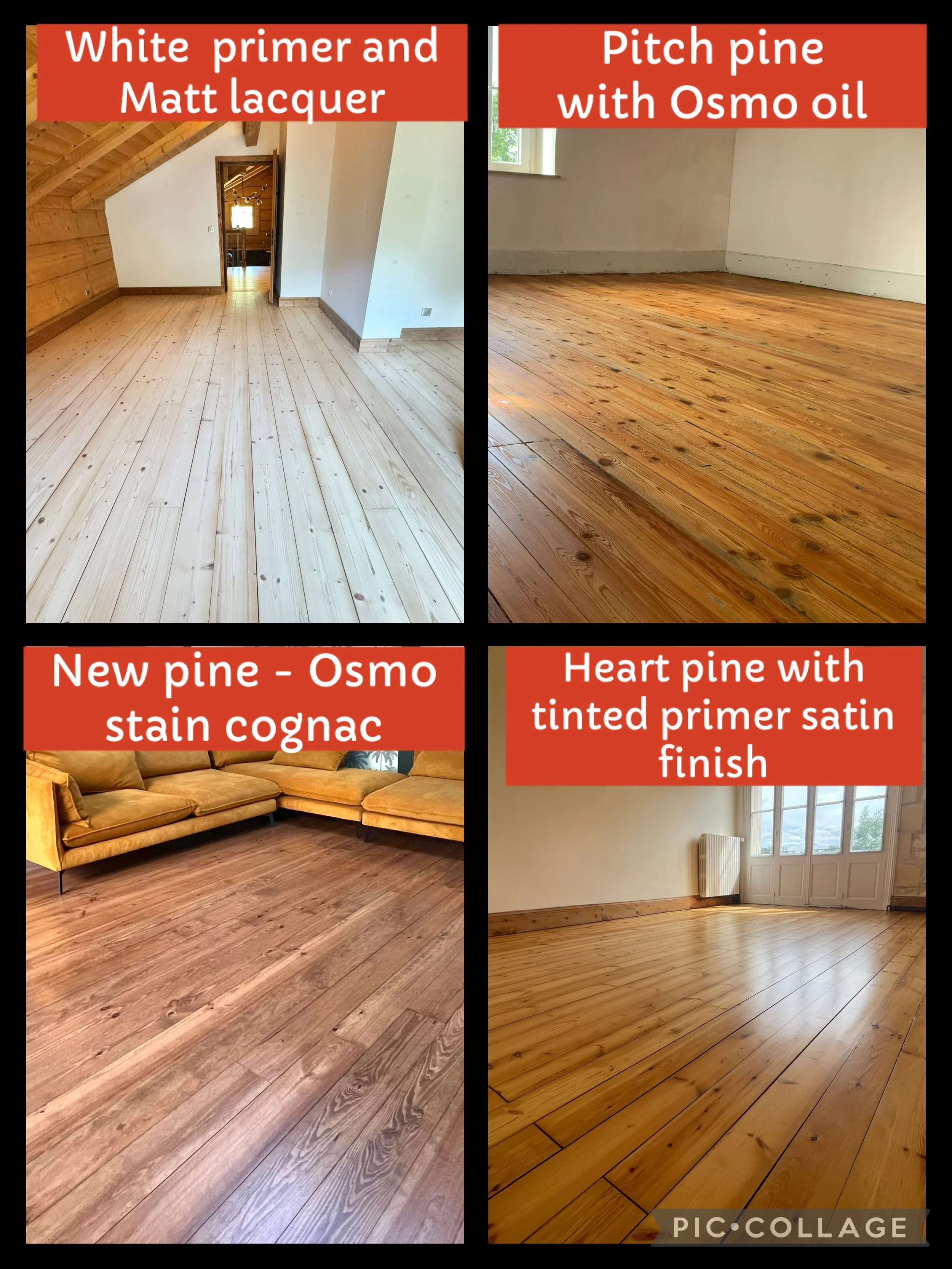
Take a look at this example, where we applied four different finishes to pine parquet. You’ll see just how much the final appearance can vary:
Photo 1: White primer + matt finish
➤ Prevents the dreaded “orange pine” effect that most people try to avoid.Photo 2: Osmo oil on natural pine
➤ Brings out the warm, honey-golden tones typical of fresh pine.Photo 3: Osmo Oil Stain (Cognac) on new pine
➤ A rich, deeper finish, ideal for traditional or rustic settings.Photo 4: Tinted primer + satin clear coat
➤ Adds subtle colour variation while preserving a clean, natural look.
The takeaway?
One species. Four finishes. Four totally different results.
That’s why testing and preparation matter more with pine than almost any other type of wood.
Why Pine Can Be So Tricky
Unlike oak or walnut, pine is a softwood — full of natural oils and resin that interact with stains in unexpected ways. If not properly sealed or primed, pine can:
Turn very orange, even under clear varnish
Absorb oils unevenly, leaving patchy results
Highlight imperfections or sanding marks
React differently between new and reclaimed boards
The older the pine, the more varied the grain, tone, and absorption will be. This is especially true in heritage homes or when combining old and new planks during restoration.
🔍 Common Types of Pine Parquet in FrancE
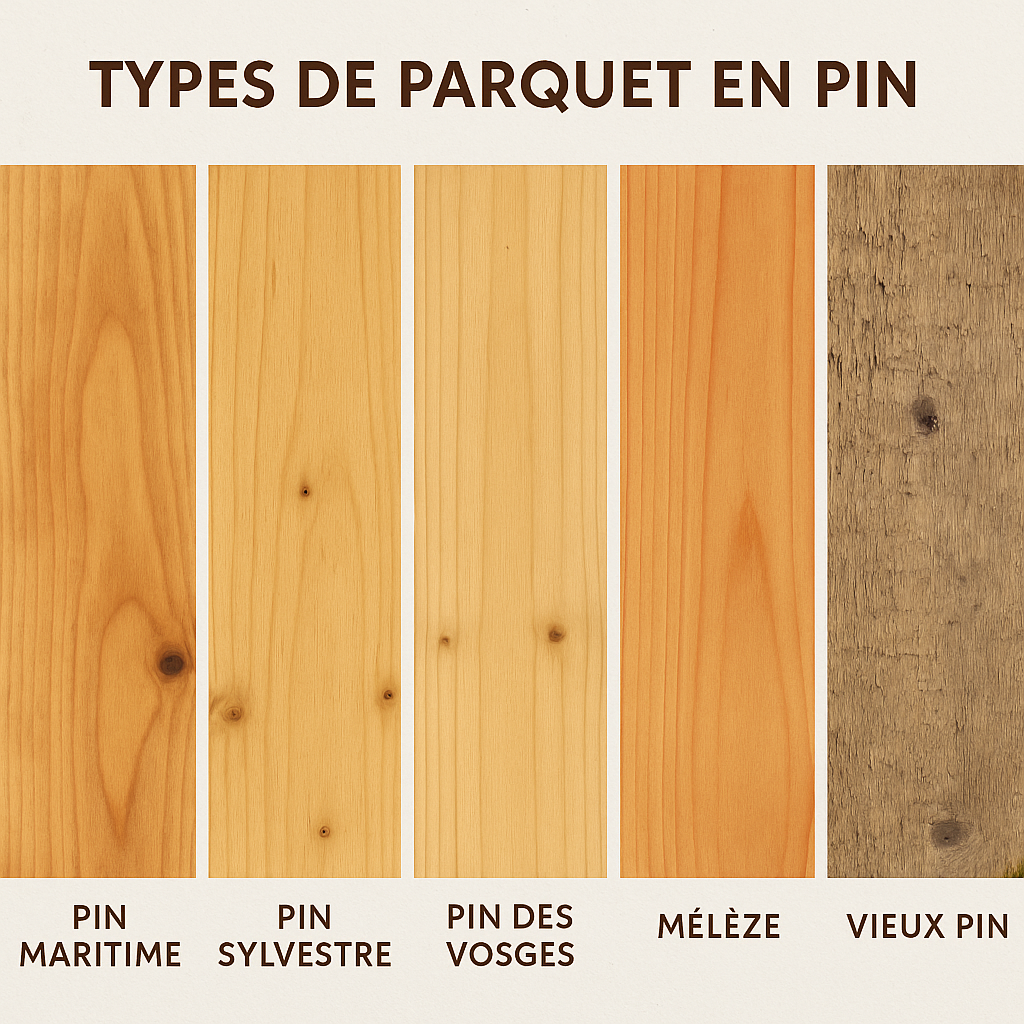
To make things more complex, France is home to several distinct types of pine — and each behaves a little differently:
1. Pin Maritime (Maritime Pine)
Grown mostly in the southwest (Landes). Reddish tones, highly resinous. Very common in rustic homes.
2. Pin Sylvestre (Scots Pine)
Pale yellow to light brown. Found in many older floors across northern and central France.
3. Pin des Vosges
Similar to Scots Pine, but sourced locally from the Vosges. Slightly denser and often more stable.
4. Mélèze (Larch)
Not technically pine, but often grouped with it. Durable, reddish-golden tones. A top choice for Alpine chalets and ski lodges due to its resistance to moisture and temperature shifts.
5. Pin Weymouth (Eastern White Pine)
Less common, fine-grained, sometimes used in 19th-century high-end homes.
6. Vieux Pin (Reclaimed Old Pine)
Not a species, but a category. These reclaimed boards often come from barns, Haussmann buildings, or rural homes — with patina, nail holes, and deep character built in.
Final Thoughts: Know Your Wood Before You Finish It
If you’re restoring pine floors in your home — especially in period properties, French country homes, or Alpine chalets — take the time to:
Identify the species of pine
Understand how it reacts to finish products
Avoid shortcuts like clear varnish without primer
Work with a specialist who understands traditional and modern finishes
At Parfait Parquet, I’ve worked on over 150 historic homes across France. My job isn’t just to sand floors — it’s to restore them with respect for the home and precision for the finish.
Whether you’re an expat, a new homeowner in France, or renovating a château — I’m here to help you choose the right path forward for your parquet.
Need advice or a quote for your pine floor?
Based in Nouvelle-Aquitaine – working across France
Contact me via WhatsApp: Click here to message
🌍 Website: www.parfaitparquet.fr
#PineParquet #FrenchPropertyRenovation #PineFloorRestoration #ParquetFinishes #ChaletRenovation #SkiLodgeFloors #PineStaining #RenovationFrance #ParquetFrance #HeritageFlooring #ExpatsInFrance